
Temporary Ground Protection for Oilfield, Frac, and Pipeline Work Sites
Oilfield, frac, and pipeline work sites can be rough on the ground underneath them. Heavy trucks, excavators, loaders, pipe sections, pumps, hoses, storage areas, and repeated traffic can quickly turn soft ground into ruts, mud, and damaged access points. That's why temporary ground protection matters.
On these types of job sites, crews often need a practical way to protect access roads, staging areas, pipe storage zones, equipment areas, and work surfaces. In many cases, used conveyor belt can be repurposed into durable rubber matting that helps protect the ground and reduce wear in high-use areas.
Used rubber belting isn't always the right solution for every site condition. Some projects require engineered access mats, crane mats, timber mats, or approved crossing systems. But for many temporary work areas, reclaimed conveyor belt can be a cost-effective option when durability, surface protection, and function matter more than appearance.
Why Temporary Ground Protection Matters on Oilfield and Pipeline Sites
Oilfield, frac, and pipeline projects often involve heavy equipment moving across temporary work areas. Access points may be used repeatedly by trucks, service vehicles, loaders, and crews hauling materials. When the ground is wet, soft, or uneven, those repeated trips can quickly create ruts, standing water, mud, and unstable working conditions.
Temporary ground protection helps reduce the damage caused by that daily movement. It can protect soil, gravel, packed ground, concrete, and other work surfaces from direct wear. It can also help crews preserve entry points, staging areas, and temporary access zones during active work.
For contractors, this isn't just about keeping a site cleaner. It is about keeping work moving. When access areas break down, equipment can get stuck, trucks can tear up the right-of-way, and crews may lose time trying to repair the ground instead of completing the job.
Common Areas That Need Temporary Ground Protection
Oilfield, frac, and pipeline sites usually have several areas where temporary protection can be useful. The exact setup depends on the project, terrain, weather, equipment, and traffic pattern. Common areas include:
Access roads
Right-of-way entrances
Pipe storage areas
Laydown yards
Staging areas
Frac pads
Pump and hose areas
Equipment parking zones
Loading and unloading areas
Turnaround spots
Water crossing approaches
Temporary work surfaces
These areas often take the most abuse because they are used repeatedly throughout the project. A single truck pass may not cause much damage. Dozens or hundreds of passes across soft ground can create a much bigger problem.
How Used Rubber Belting Helps Protect Soft Ground
Used conveyor belt is built for hard use. Before it's repurposed, it may have spent years moving aggregate, coal, stone, sand, gravel, or other heavy materials in industrial and mining environments. That makes it a strong candidate for temporary surface protection.
When cut into sections or used in larger rolls, reclaimed conveyor belt can help create a durable barrier between the work activity and the ground underneath. It can help protect surfaces from rutting, scraping, abrasion, impact, and repeated traffic.
For oilfield and pipeline crews, used rubber belting can be especially useful in areas where the surface does not need to look polished. These are work sites. The priority is toughness, availability, affordability, and practical protection.
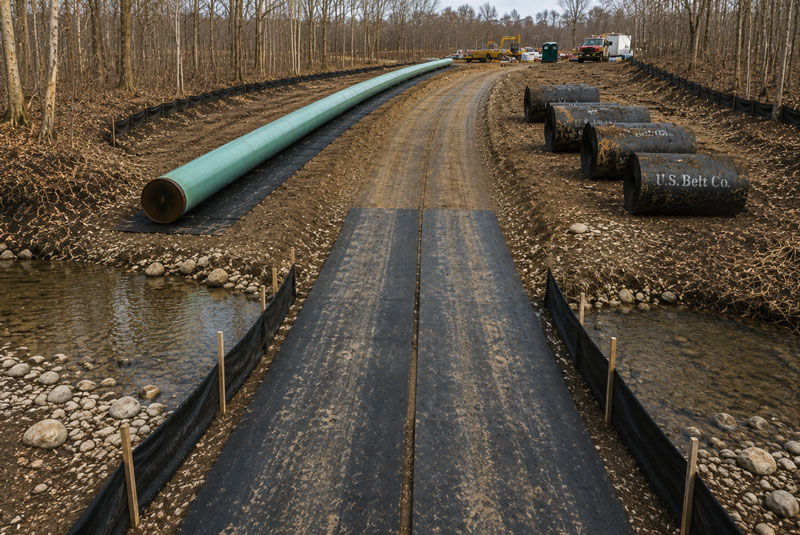
This is where U.S. Belt Co.’s pipeline mats can help support demanding oil, gas, and pipeline work areas without the cost of buying new rubber matting for every job.
For a closer look at how this material is reused after its original conveyor life, read more about how used conveyor belt is repurposed into mats and liners.
Rubber Mats for Water Crossings in Pipeline Installations
Pipeline installations often encounter drainage areas, ditches, small streams, wet low spots, and other water-affected sections along the right-of-way. These areas can be difficult because the ground near a crossing is often softer, wetter, and more vulnerable to rutting.
Rubber mats or reclaimed conveyor belt sections may be useful near water crossings as part of a temporary surface protection plan. They can help protect approach areas, reduce direct equipment contact with soft ground, and provide a sacrificial layer where crews are working around wet or muddy conditions.
This doesn't mean used conveyor belt should be treated as an engineered bridge, stream crossing system, or environmental control structure. Water crossings can involve permits, environmental rules, project specifications, and site-specific requirements. If a job requires an approved bridge mat system, timber mat system, crane mat setup, or engineered crossing, those requirements should be followed.
The practical role for used rubber belting is more focused. It can help protect work areas near crossings, approach points, hose paths, staging zones, and other temporary surfaces where rugged rubber coverage is useful and allowed by the project conditions.
Protecting Access Roads and Right-of-Way Entrances
Access roads and right-of-way entrances are often among the first areas to break down. Trucks and equipment enter and leave through the same paths throughout the job. If those areas are soft, wet, or poorly stabilized, rutting can happen fast.
Used conveyor belt can help protect these high-traffic areas by adding a durable rubber layer over the surface. It can be placed where vehicles turn, enter, park, or move across vulnerable ground.
For sites dealing with wet or muddy conditions, U.S. Belt Co. also supplies heavy-duty mud mats and ground protection mats made from used belting. These products can help support temporary access needs where crews are trying to reduce rutting and surface damage.
If rutting is already a concern on the job, this post on how to prevent ruts from heavy equipment explains why soft ground, moisture, and repeated traffic create problems.”
Staging Areas, Pipe Storage, and Equipment Zones
Pipeline and oilfield work often depends on staging. Pipe, fittings, tools, pumps, hoses, and equipment may need to sit in one area for days, weeks, or longer. Those areas can take a lot of wear, especially when crews are loading, unloading, dragging, stacking, and moving materials.
Used rubber belting can help protect surfaces in these staging zones. It can be placed under materials, around equipment areas, or in spaces where repeated movement would otherwise damage the ground or work surface.
For heavier equipment or high-impact use, heavy equipment mats made from used conveyor belt may be a better fit. For industrial yards, shops, and work areas where surface protection is the priority, industrial rubber mats may also make sense.
When Reclaimed Conveyor Belt Is a Good Fit
Reclaimed conveyor belt is a practical option when crews need durable temporary protection but do not need a finished, decorative, or highly engineered surface. It may be a good fit when the project needs:
Temporary ground coverage
Surface protection
Rut reduction
Mud control
Pipe storage area protection
Equipment staging protection
Trailer or truck bed protection
Cut-to-fit rubber sections
Bulk material for repeated use
A rugged material that values function over appearance
It may not be the right fit when the project requires engineered load ratings, crane support, approved wetland access systems, formal bridge crossings, or specific environmental protection products. In those situations, the project requirements should guide the material choice.
What to Know Before Ordering Temporary Ground Protection Material
Before ordering used conveyor belt for an oilfield, frac, or pipeline job, it helps to know how the material will be used. Important details include:
The type of ground or surface being protected
Expected truck and equipment traffic
Whether the area is wet, muddy, rocky, or abrasive
Needed length and width
Desired belt thickness
Whether the belt needs to be cut into sections
Whether the material will be moved between job sites
Whether appearance matters
Whether the project requires a specific mat type
The clearer the application, the easier it is to match the right used belt to the job.
A Practical Ground Protection Option for Oilfield, Frac, and Pipeline Crews
Oilfield, frac, and pipeline work sites are demanding. Crews need access, staging, equipment movement, and surface protection in areas that can quickly become muddy, rutted, or worn down.
Used conveyor belt can offer a practical solution for many temporary ground protection needs. It can help protect access roads, staging areas, pipe storage zones, water crossing approaches, equipment areas, and soft ground where durability matters more than appearance.
U.S. Belt Co. supplies used conveyor belt for oil, gas, pipeline, construction, industrial, and ground protection applications. Contact Art at U.S. Belt Co. to discuss available belt options for your next project.
If you need used conveyor belt, rubber matting, or ground protection material for your next project, contact Art Murray at U.S. Belt Co. for available inventory, pricing, and the best options for your site, equipment, or work area.


Comments