
How to Prevent Ruts from Heavy Equipment
- Jun 5
- 4 min read
Updated: Jun 27
Heavy equipment can tear up a jobsite fast, especially when the ground is soft, wet, or uneven. Skid steers, excavators, loaders, trucks, and lifts can leave deep ruts that slow down the job and create extra cleanup costs. In some cases, the damage can be worse than the work itself. That is why ground protection matters before the first machine drives across the property. With the right matting in place, crews can protect lawns, gravel areas, access roads, and muddy jobsites from unnecessary damage.

Key Takeaways
Heavy equipment ruts usually happen when weight, moisture, and soft ground come together.
Ground protection mats help spread equipment weight across a wider surface.
Used conveyor belt can be a practical matting option for jobsites, farms, fields, and access areas.
Planning ahead is cheaper than repairing deep ruts after the work is done.
The right mat depends on the equipment, ground conditions, and how long the surface needs protection.
Why Heavy Equipment Leaves Ruts
Ruts happen when heavy equipment puts too much pressure on soft or unstable ground. Wet soil, loose gravel, clay, grass, and recently disturbed ground are especially vulnerable. Once the tires or tracks sink in, each pass makes the problem worse. A small depression can quickly turn into a deep rut, especially if trucks or machines keep using the same path.
This is common on construction sites, farms, pipeline jobs, landscaping projects, tree service jobs, and utility work. Even careful operators can cause damage if the ground is not protected first.
Use Ground Protection Mats Before the Damage Starts
The best time to prevent ruts is before equipment arrives. Ground protection mats create a barrier between the machine and the surface below. Instead of all the weight pressing into one small area, the mats help spread the load across a larger surface.
This can help protect:
For example, if a contractor needs to drive a skid steer across a customer’s yard, laying mats first can help avoid deep tire marks and reduce cleanup after the job.
Choose the Right Path Across the Site
Matting helps, but site planning still matters. Crews should choose the firmest route whenever possible and avoid unnecessary turns on soft ground. Turning heavy equipment in place can dig into the surface quickly, even with experienced operators.
It also helps to create one clear travel path instead of letting trucks and equipment cross the site in different places. A defined path keeps the damage controlled and makes it easier to place ground protection mats where they are needed most.
Why Used Conveyor Belt Works Well as Heavy Equipment Matting
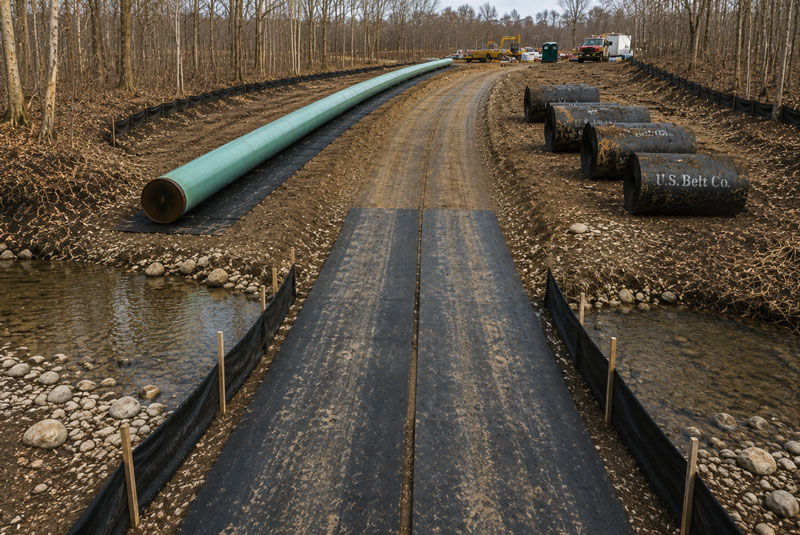
Used conveyor belt can make a strong, flexible option for heavy equipment mats and mud mats. It is built to handle abrasion, weight, movement, and rough material. When repurposed as matting, it can help protect the ground while giving equipment a more stable surface to travel across.
Used conveyor belt mats can be useful for construction sites, muddy access areas, farms, field work, landscaping projects, and industrial jobsites. They can also be cut into different sizes depending on the application, which makes them practical for many types of work areas.
Don’t Wait Until the Site Is Already Torn Up
Once ruts are created, fixing them takes time and money. Crews may need to bring in fill, regrade the area, reseed grass, repair gravel, or smooth out access roads. In wet conditions, the damage can keep getting worse until the ground dries out.
Using ground protection mats at the start can help avoid that problem. It is a simple step that can protect the property, keep equipment moving, and leave the jobsite in better shape when the work is done.
Final Thoughts
Heavy equipment is going to put pressure on the ground. The goal is to control where that pressure goes and how much damage it causes. Ground protection mats made from used conveyor belt can help protect soft ground, reduce ruts, and create a more reliable work surface.
If your crew is working on mud, grass, gravel, fields, access roads, or construction sites, it is worth planning your matting before the job begins. A little preparation can save a lot of repair work later.
Need Help Finding the Right Belt or Ground Protection Solution?
Every jobsite is different. The right material depends on your equipment, ground conditions, access needs, and how the used conveyor belt will be used. Whether you need ground protection mats, mud mats, mining belts, construction mats, farm mats, truck and trailer mats, or another heavy-duty rubber solution, U.S. Belt Company can help you think through the best option.
If you need used conveyor belt, rubber matting, or ground protection material for your next project, contact Art Murray at U.S. Belt Co. for available inventory, pricing, and the best options for your site, equipment, or work area.

Comments